Today we take a look at a board game of my own design, “The War of Roses.”
Click here for current version of rules
In the beginning…
The first iteration of the game was focused on the area control mechanic. My partner, Dev, and I began brainstorming ideas. We eventually came up with a fairly simple game with a 12×12 board where players would try to take control of as much of the board as possible.
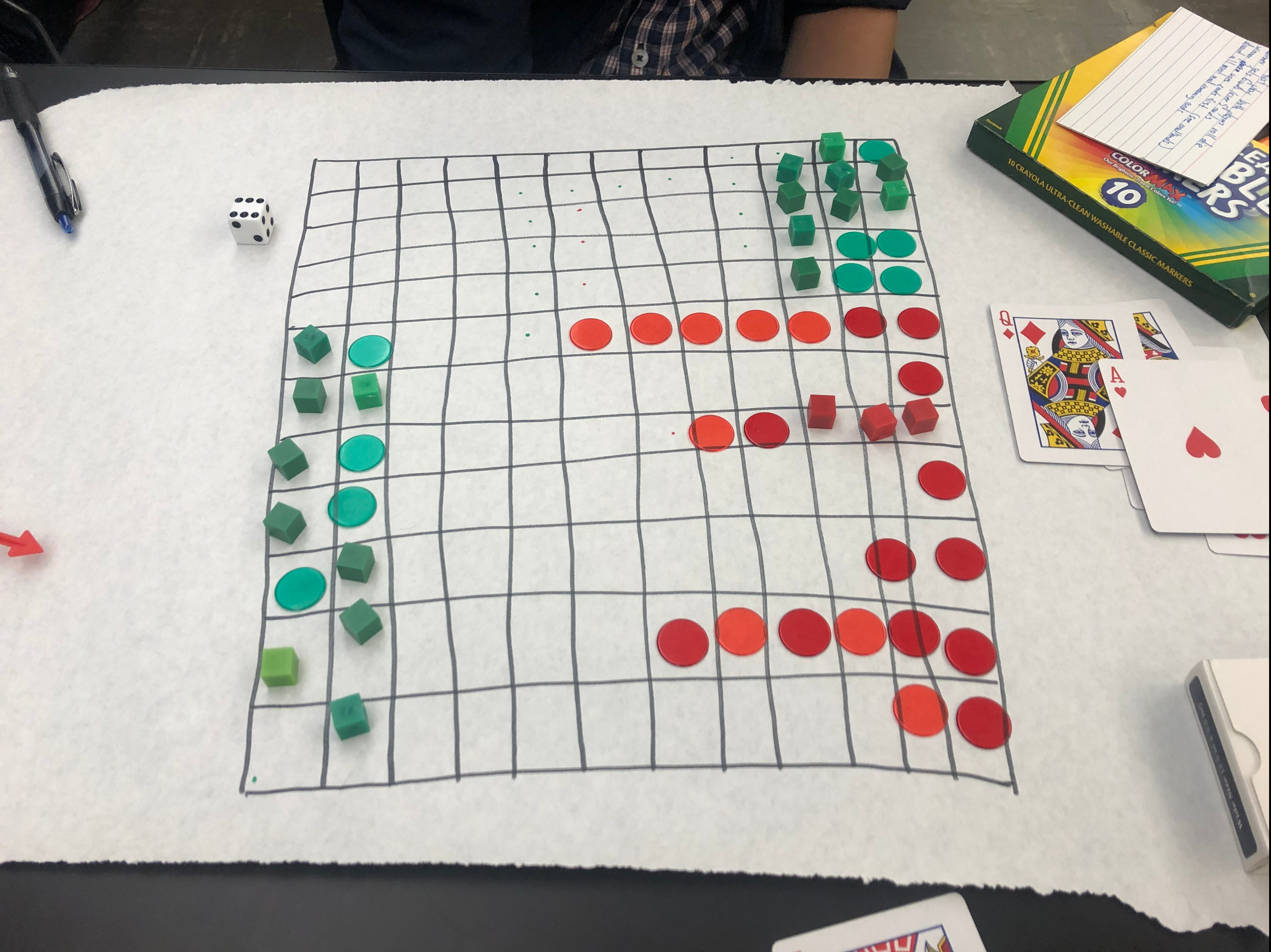
We decided to follow James’ lead and use poker hands to determine how many tokens each player would receive, with face cards earning extra tokens. However we added an additonal element to it in that players would each roll a dice and highest would receive an extra card for that time.
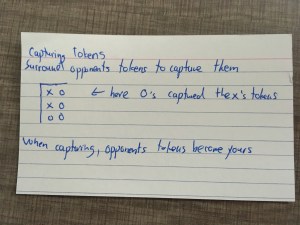
Now it was time to play. We decided that we would require units to be fully surrounded on all sides (including diagonals) in order for them to be captured. Captured tokens would be come yours.
From this playtest we found that it would take a lot of tokens in order for a player to completely control the board. We realized it may be a good idea to shrink the board to reduce game time and the number of pieces required.
Overall, I didn’t feel very great with what we had made. I felt that the game itself mirrored the game Othello a bit too much and was not that fun.
And so a few days came to pass…
After a few days of thinking, I decided that I would give the game a complete overhaul. I would use similar methods for obtaining troops, but have multiple types and an obstacle, a river, on the board. The board would not be an 8×9 board with the river being in the middle. Players’ new objective would be to wipe out all of their opponents troops to win. The mechanics of the game became grid movement and dice rolling.
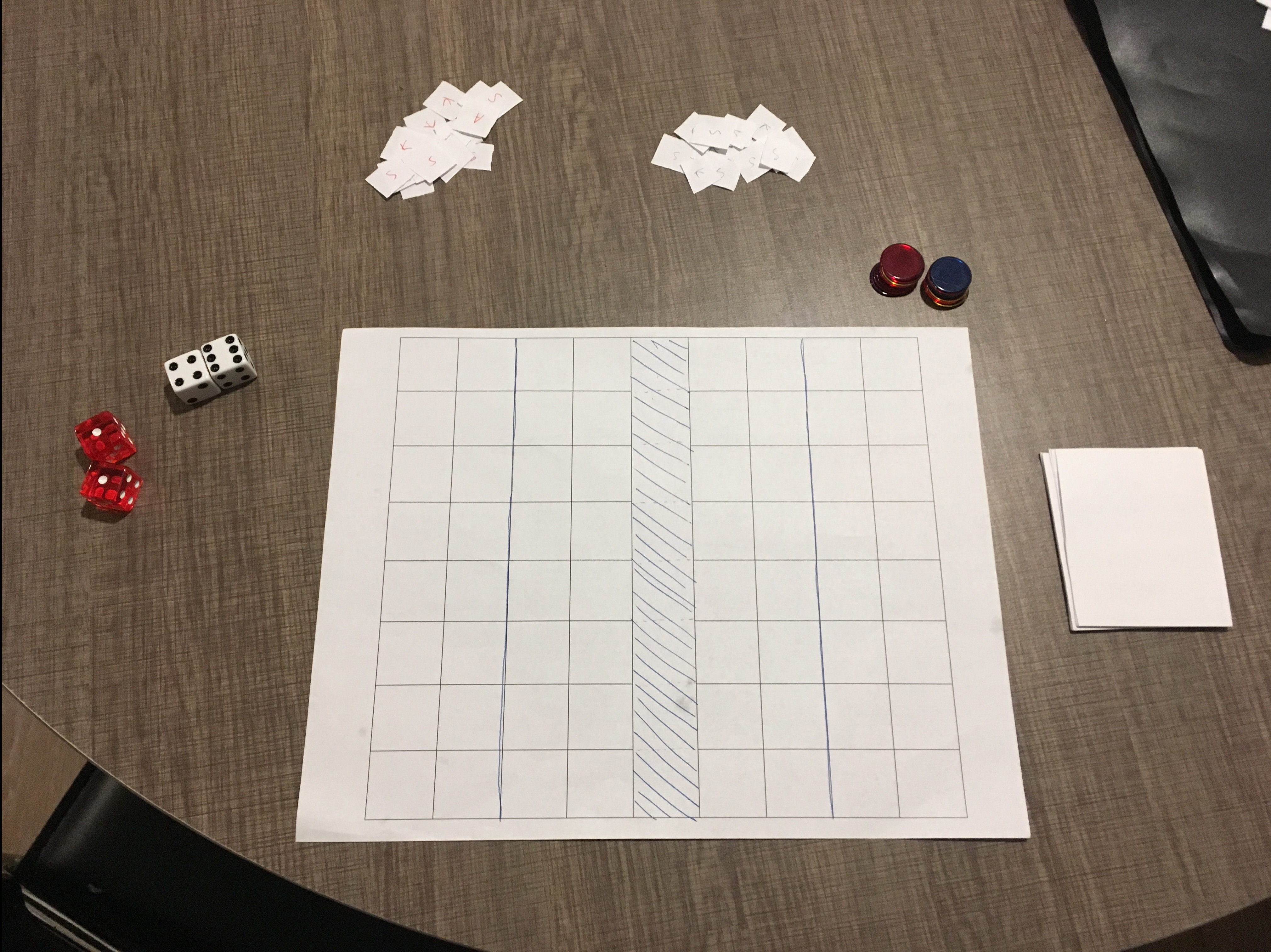
My first playtest went awry almost immediately. With no intial pieces on the board and no restrictions on where players could place troops, if one were to get lucky and get a knight on the board first, they could easily move their way across and win almost immediately which is what happened.
There were also problems in the fighting system. Initially if you attacked with one of your troops and lost your troop would be removed from the board. This led to a player losing everything if they were simply unlucky.
Finally, with players drawing War cards every turn there were substantial changes to the board state every turn and even during one playtest both me and my roommate were left with an empty board after a Blizzard card was drawn on the second turn.
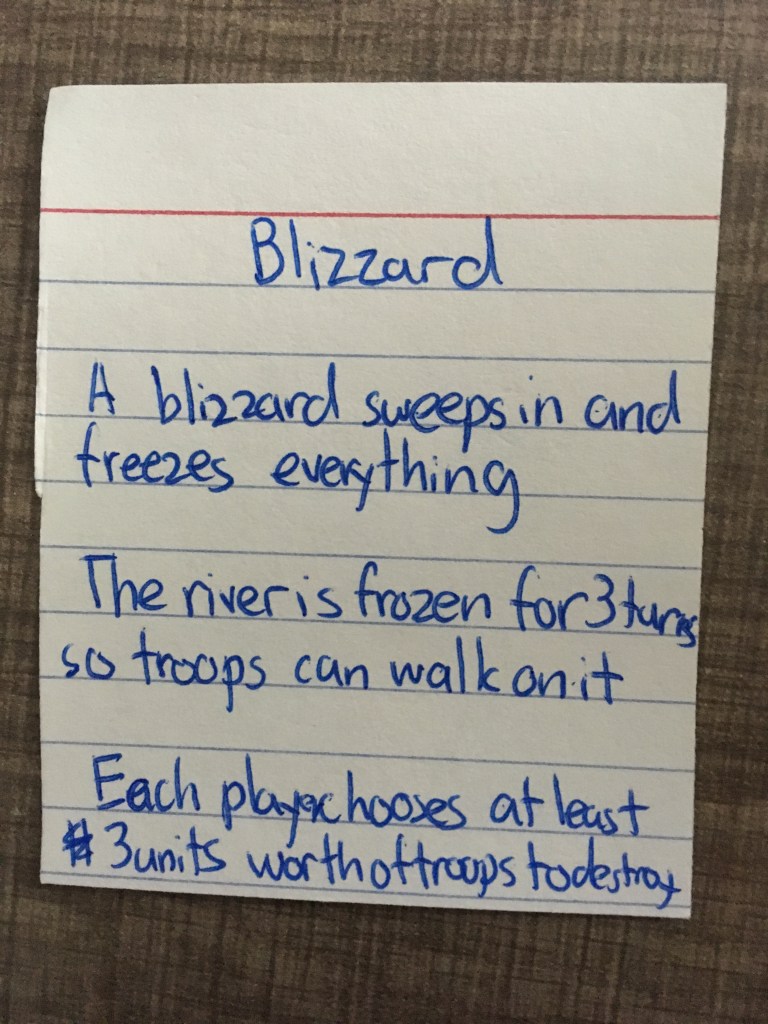
Additionally with drawing War cards each turn the game would end pretty quickly even if the Ceasefire card was on the bottom.
The feedback I received from my roommate was more on the realism of the game in addition to some of the flaws in gameplay explained above.
Returning to the present…
Finally with a few playtests behind me I implemented some new and improved rules.
To solve the problems listed above I did the following
- Players could now only place troops on the back two rows of their side.
- Players started with 3 squire pieces and 1 knight piece which they could place during setup.
- Attackers would no longer lose their troop if they lost a fight
- Players would only draw a War card if they defeated a troop that turn.
There were also a few minor changes that I will not go into but you can see in the updated rules. Here was also where I finalized the inspiration for this game, the “War of Roses.”
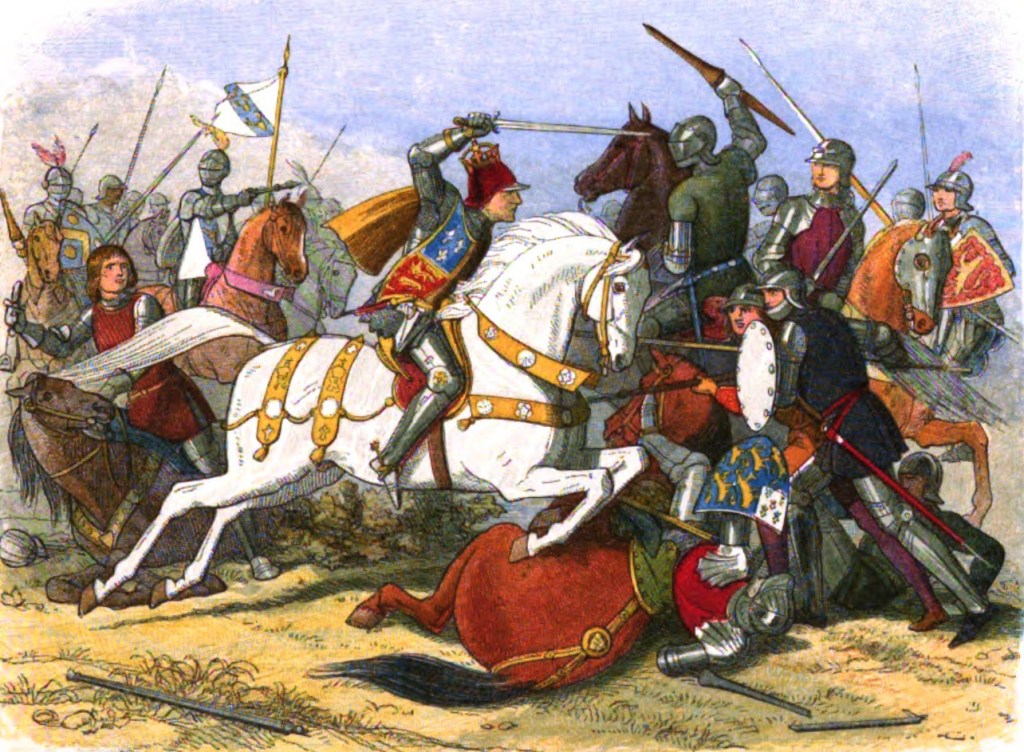
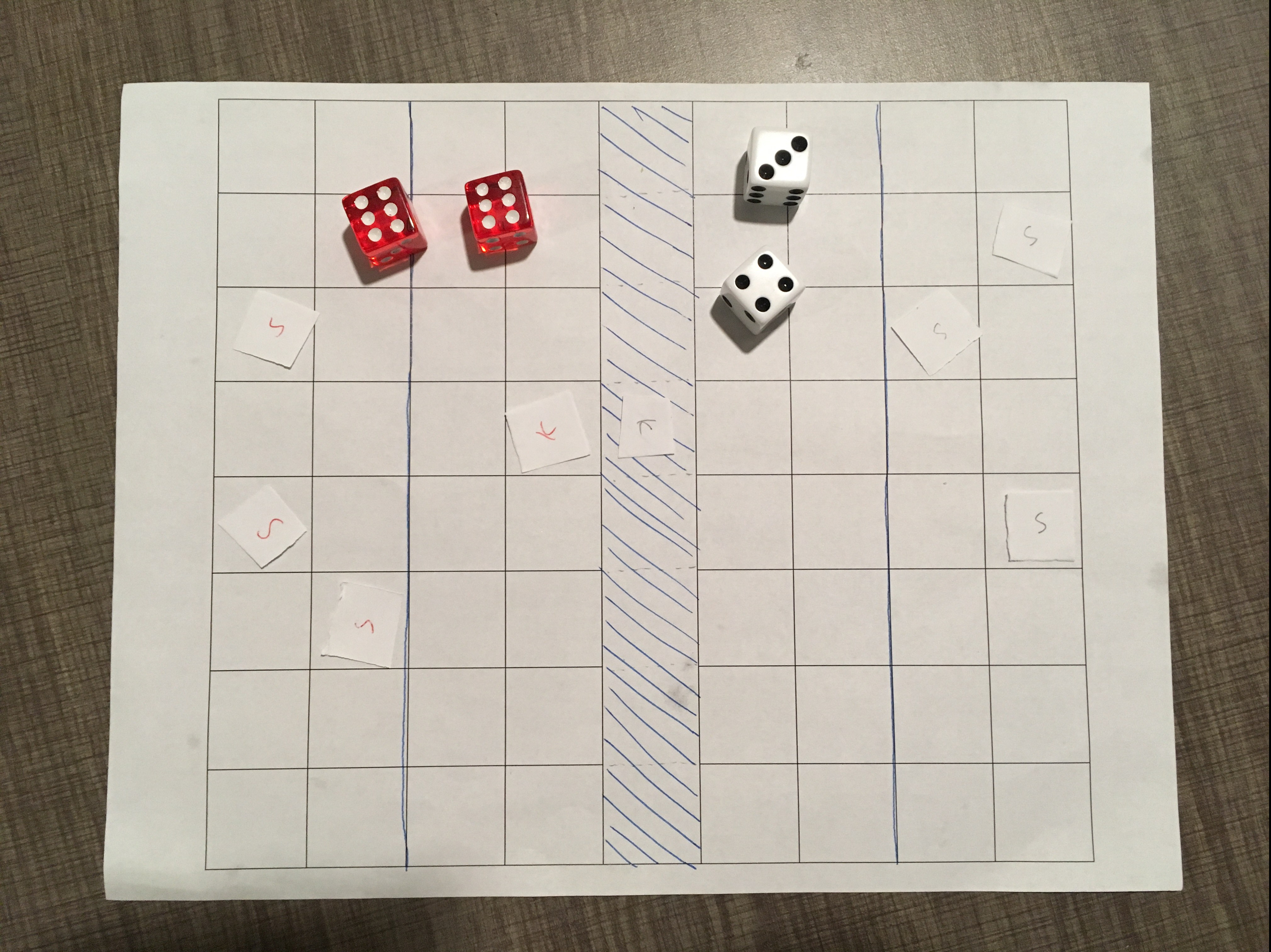
Now it was time to put the new rules to the test. With the third playtest in class, my partner and I engaged in battle, with me fighting as the White Rose of York and her the Red Rose of Lancaster.
My first turn was quite bad as I drew a useless hand and so only gained the one unit. My partner on the other hand started with a pair giving her a total of 3 units. This would be the trend for many turns to come.
Next, was the first fight, it was her knight attacking mine. Unfortunately for me she rolled double sixes thereby completely trouncing me and leaving me with only a few lowly squires.
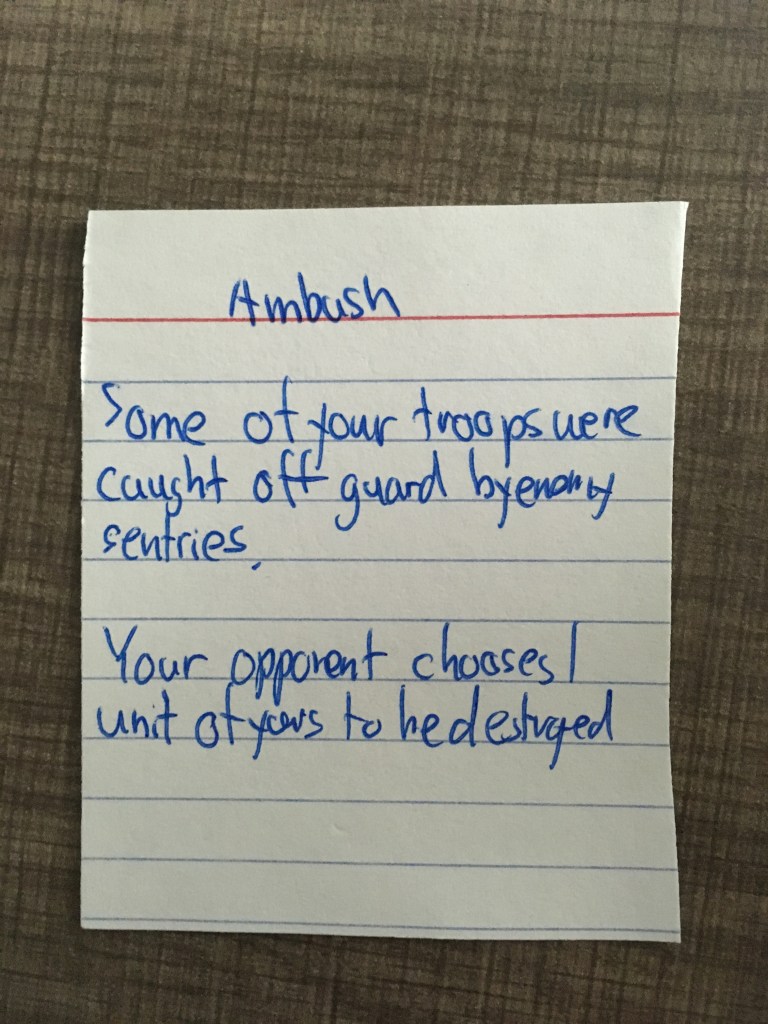
Luckily for me, because she had defeated a troop, she had to draw a War card at the end of her turn, which was an Ambush card allowing me to defeat one unit of hers.
Ultimately though, she continued to get good rolls and draws and defeated me after about 25 minutes of play.
A bit of feedback I got from this playtest was to possibly expand the board as it was quite easy for one piece to cross the entirety of it with just a single roll. Another was to possibly allow flanking scenarios, where two troops would attack a single one at the same time as shown below.
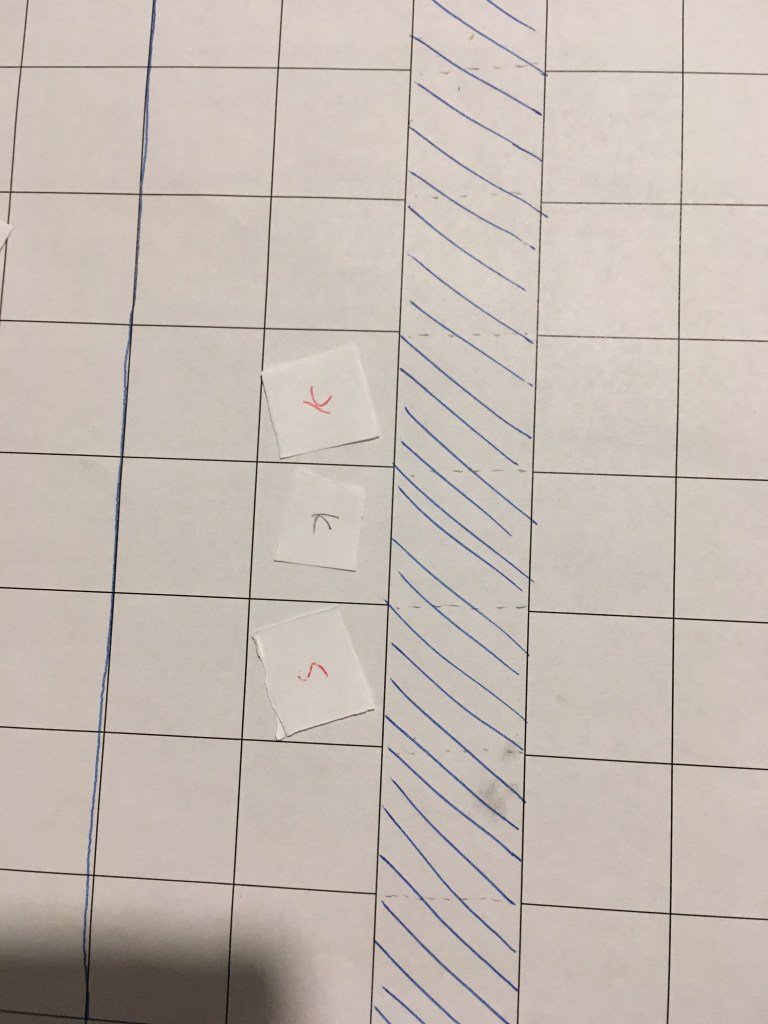
Finally she pointed out a problem that I had forgotten to correct over my many iterations, that an artillery piece had never been played and so its cost should probably be reduced.
Overall, I really enjoyed this project and feel that it could really be a reality in the future. There are obviously some small kinks to still work out but the core of the game is solid. Now the next thing to do is get some better pieces not just a piece of paper with a letter on it!
 One Game At A Time