Throughout this class, I learned a lot about game design. I had made some games before but they didn’t have much depth. What I found most interesting was the amount of layers to a game that had to be considered and how much effort really goes into one. Being able to play games also was very interesting. I got to see a lot of games, including those by other students, that I typically would not see and many of them have inspired me to make more games perhaps using some of their ideas.
What I enjoyed the most was being able to have the freedom to design whatever game I wanted. My favorite was definitely the final project. In the past I’ve wanted to make more games, but being a terrible artist never really had an opportunity to bring it to fruition. Being able to work in a group with talented artists really made my year and I am now much more interested in pursuing game design as a career. Thank you to the professor for this opportunity and thank you to my team for all they have done.
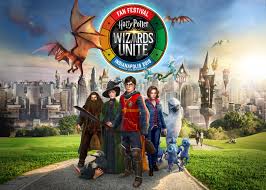
Today we played the AR mobile game, Harry Potter: Wizards Unite which is very similar to Pokemon Go. In this game the player walks around and finds “confounded” items and creatures and “unconfound” them. When unconfounding the player traces the pattern in order to cast a spell. There are also buildings around the world where players can find energy, potion ingredients, and boss fights. As a class we seperated into our different houses but that eventually devolved as my group ended up being people from different ones.
It was an enjoyable experience playing with my peers as we all at first struggled to figure out how to play the game. While I did not get the opportunity to try out the fortress, this would have been a great way to play with other players in a cooperation event. However, outside of that I felt that my experience of sitting next to others did not really differ from playing alone.
Overall I feel this game is very much a reskin of Pokemon Go but with elements of Harry Potter instead. However I am a huge Harry Potter fan and therefore enjoy the sentiment. I haven’t had a chance to see how much of the books has been implemented in the game, but I look forward to finding out.
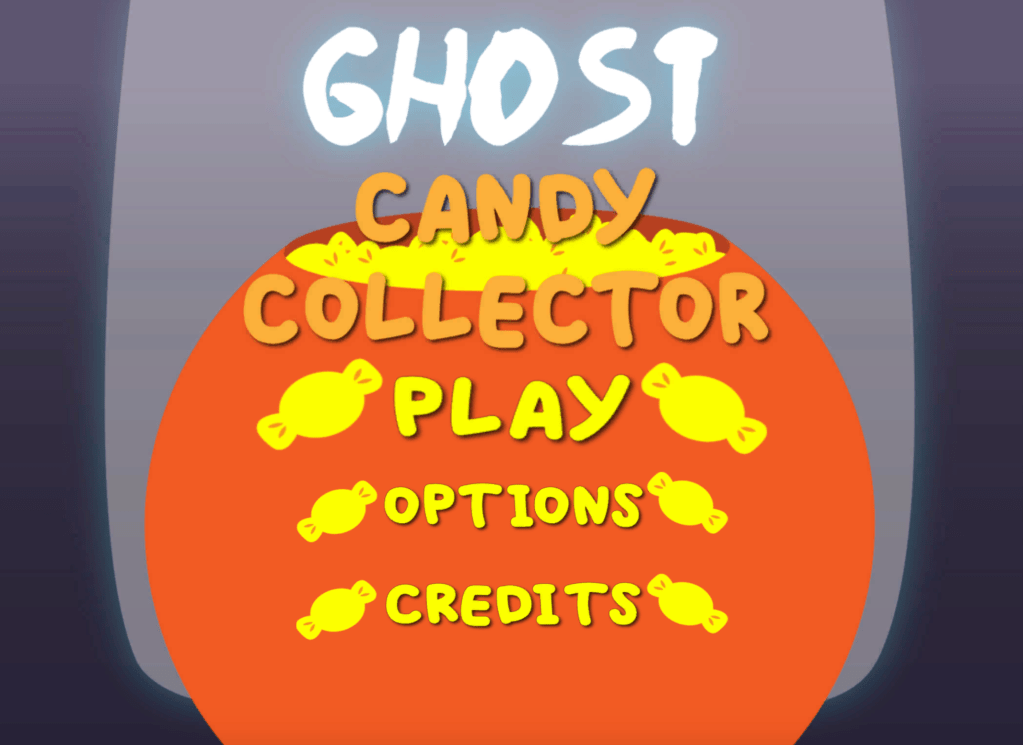
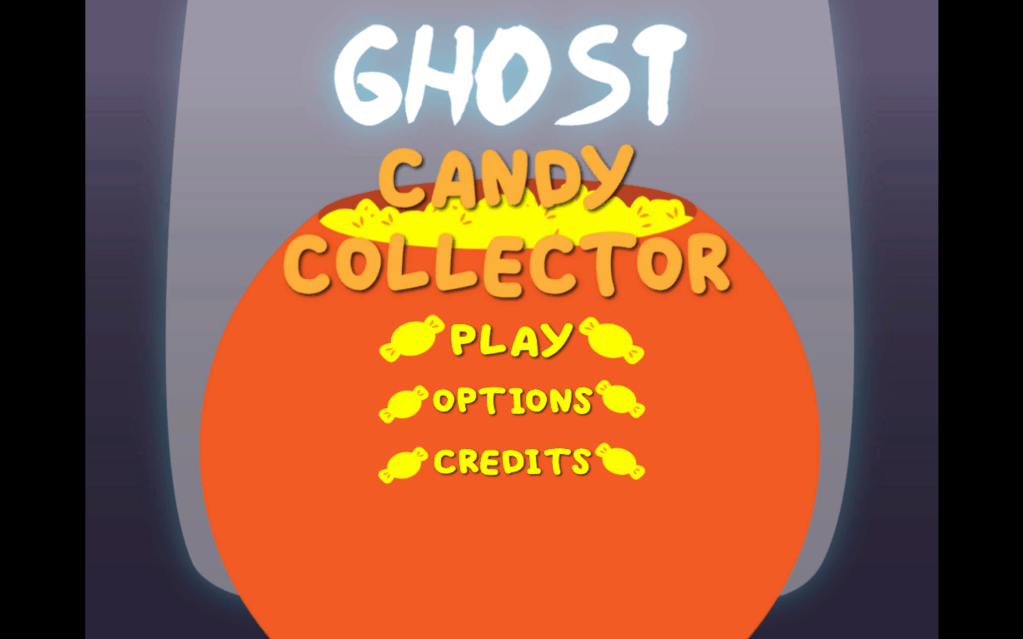
Credits Progammed by Ryan Kwong Art by Emily Chau Music by Levi Davis on Youtube (8-Bit VRC6 Remix of Spooky Scary Skeletons ) Monster Parade by Loyalty Freak Music Based on the tutorial by BlackthornProd on Youtube
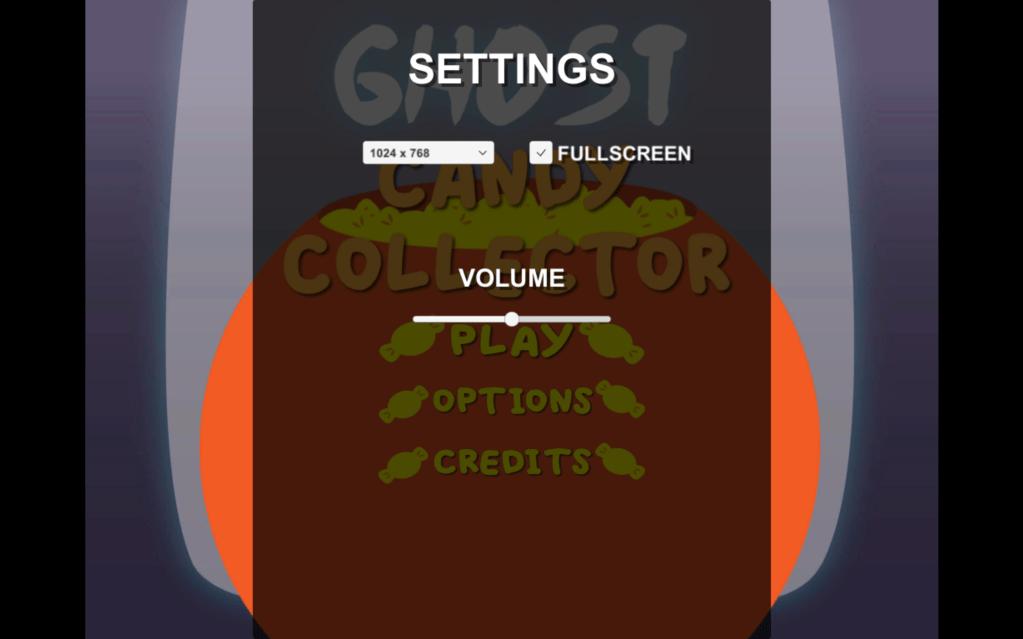
Technical Issues version 0.2.1: Bug with changing resolution to anything other than 1024×768, scenes are cut off or stack incorrectly Settings do not stay the same when moving between play scene and menu
Feedback Issues version 0.2.1: Ghost movement could be smoother Spider is very annoying Player dies very easily, possibly add more health Tutorial is not completely apparent
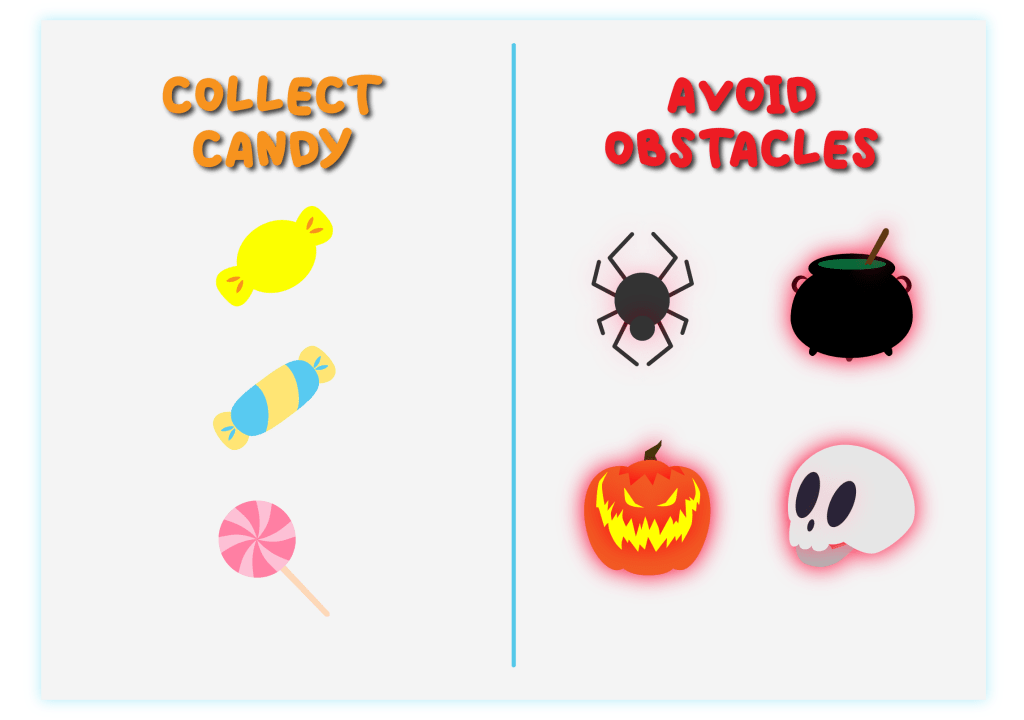
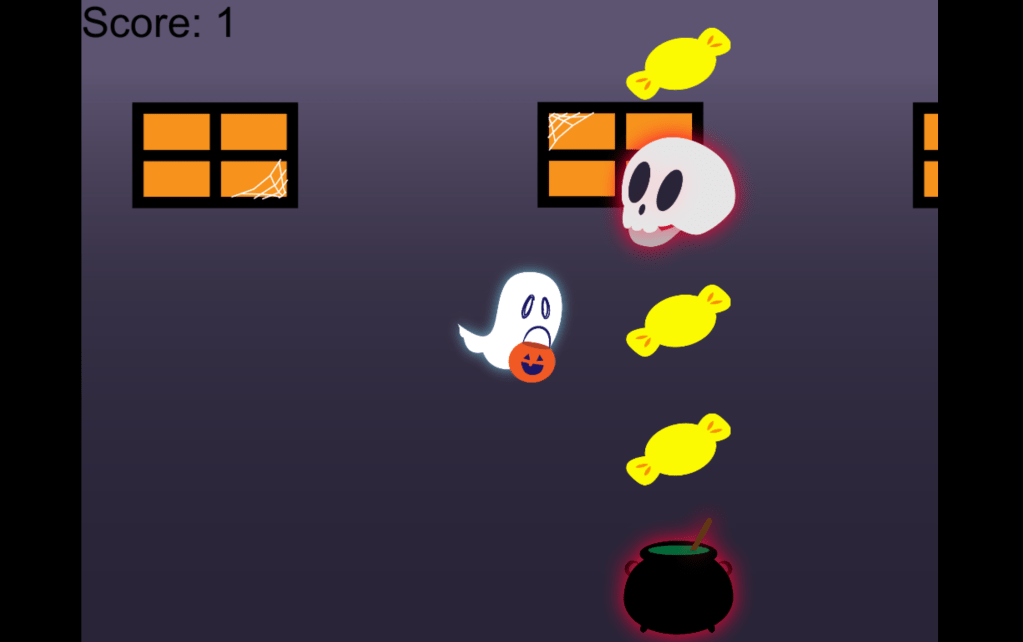
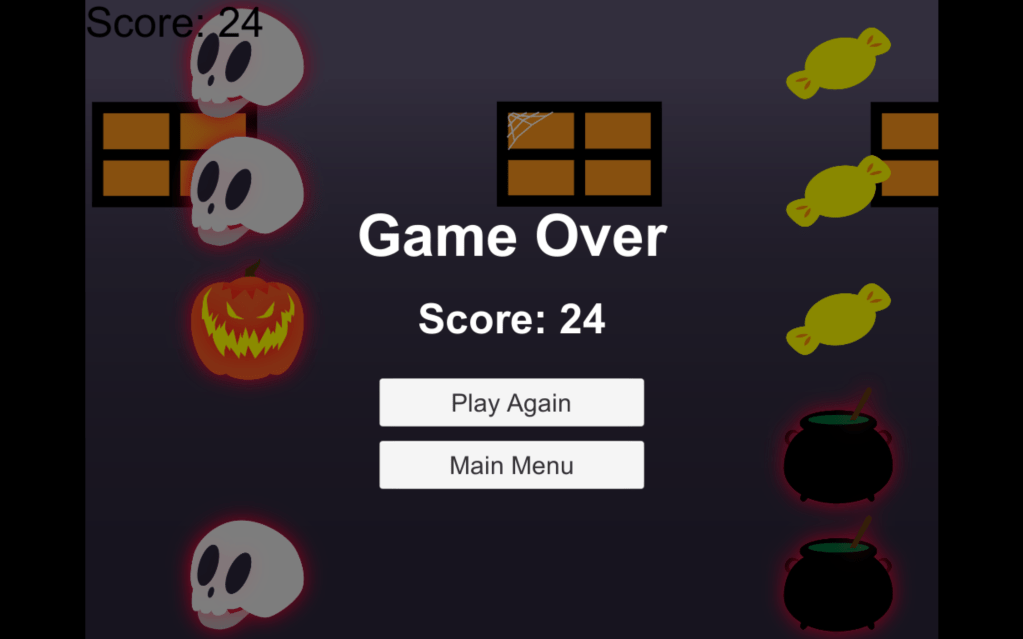
Instructions: Use the up and down arrow keys to move ghost up and down Collect candies for points Avoid obstacles (one hit will end game)
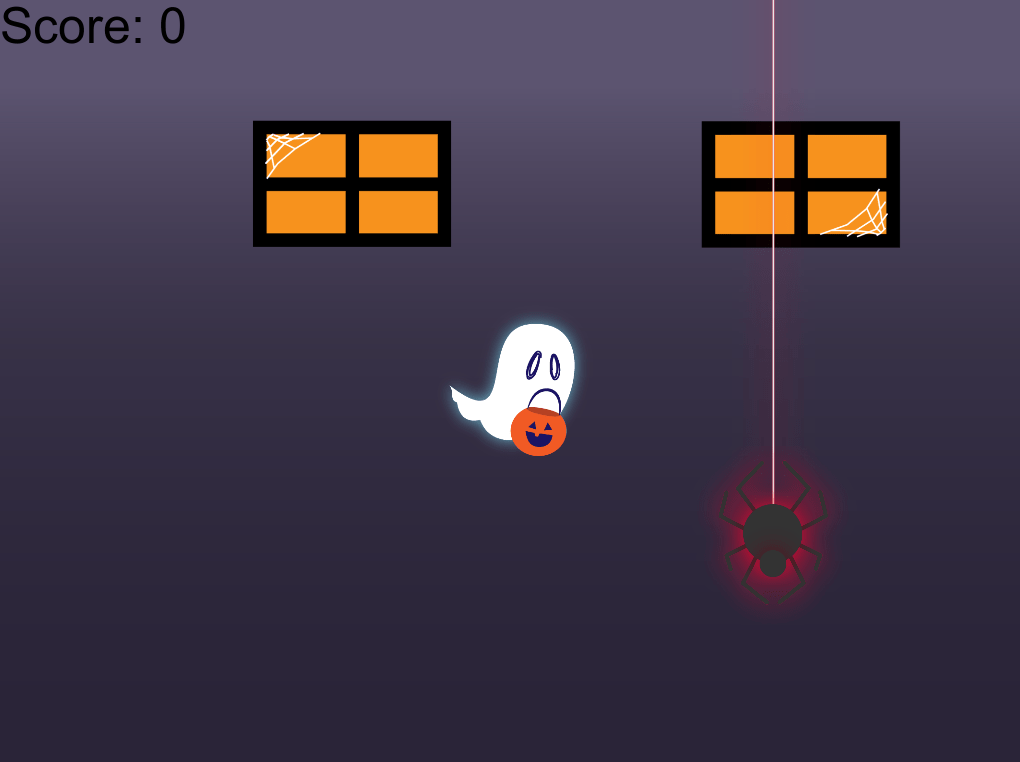
Current State of the Game: From our alpha , we implemented new difficulty with increasing the speed based on the players score, and a new obstacle, a moving spider. Overall, the only bugs we really have are an issue with our settings. However this was mostly a side project that I decided to program to make the game more polished and so really does not interfere with gameplay. As for the future of this game, we had several things on the back burner for if we had additional time such as powerups, an entity chasing the ghost (similar to games like Temple Run/Subway Surfers), and character selection with different levels.
As the programmer I was in charge of putting together the mechanics of the game. As the producer, I made sure that we remained on schedule. This was made easier by being the programmer because I was able to program specific parts and make those a priority for assets.
Playtest 1: In this playtest, the player really enjoyed the different elements in the game, particularly the obstacles. They did recommended that we maybe added more obstacles or increase the difficulty more as the game went on. When I asked about what they thought about the speed of the obstacles, they said it was good for the beginning but could be faster as the game progresses. In terms of the art and sound, they really liked the glow put around some of the sprites as well as the art in general.
Playtest 2: In this playtest, the player really enjoyed the music and the small details in the menu. They thought that we could add different obstacles that do different things besides just being stationary. At first they did not realize that the character moved from row to row instead of continuously. When I asked about what they thought about the speed of the obstacles, they thought that the speed should speed up over time. In terms of art and sound, they thought that sound should be added when collecting candy. Finally they recommended possibly adding a high score feature.
Overall, from the playtests I got that the game at its core is pretty finished. However, I should add more things that increase the difficulty as the game progressed. This is something that I plan to work on as well as more features that build on the core mechanics. In terms of the core game, I feel that I will keep most if not all of it as is.
Yesterday I played six different, mostly flash-based, video games. Today I’ll be discuss three of the games that I played including one that I both watched and played.
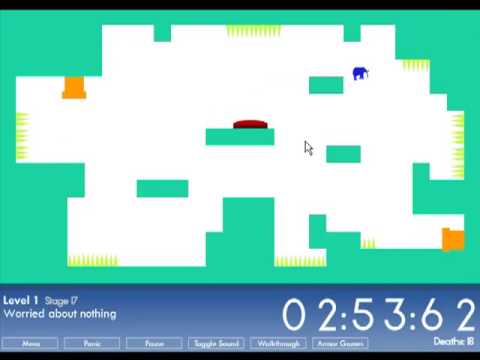
The first game we have is This is the Only Level by Armor Games. This is a platformer type game in which you control a small elephant and try to reach the exit pipe. Although it is only one level there are different stages as you progress with each stage having a different rule set, such as the elephant being super bouncy.
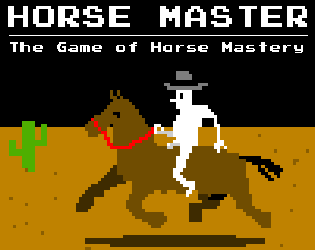
The next game we have is Horse Master: The Game of Horse Mastery by Tom McHenry. This game was made with Twine, which is a tool that allows you to create interactive story lines. Here you are an aspiring Horse Master and start your journey by buying a horse. You then go about training and caring for your horse in the days leading to the Horse Master Competition. I ended up choosing the most expensive horse(at least I think it was) and eventually ended up being evicted from my house and having to scavenge in the last days before the competition.
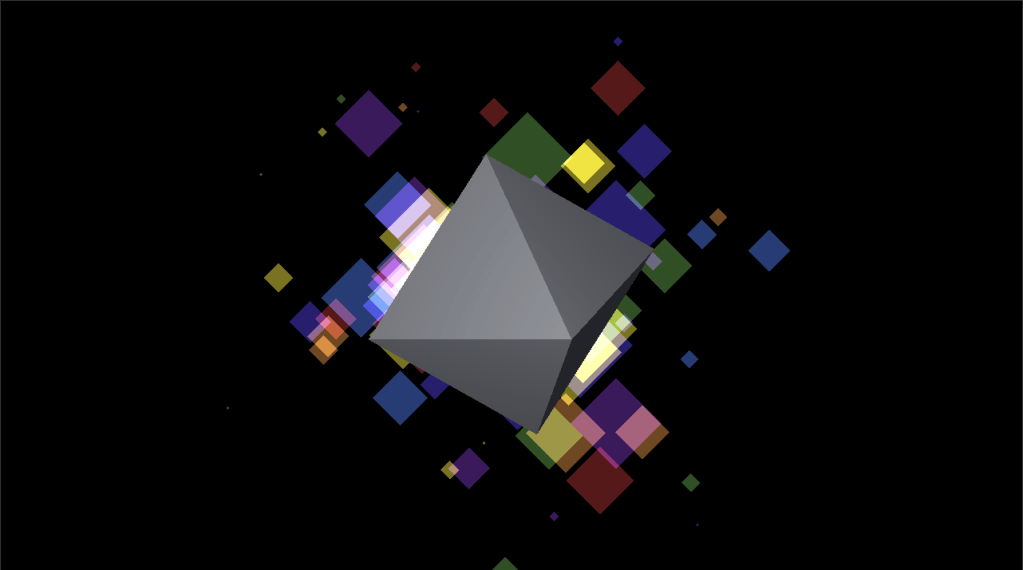
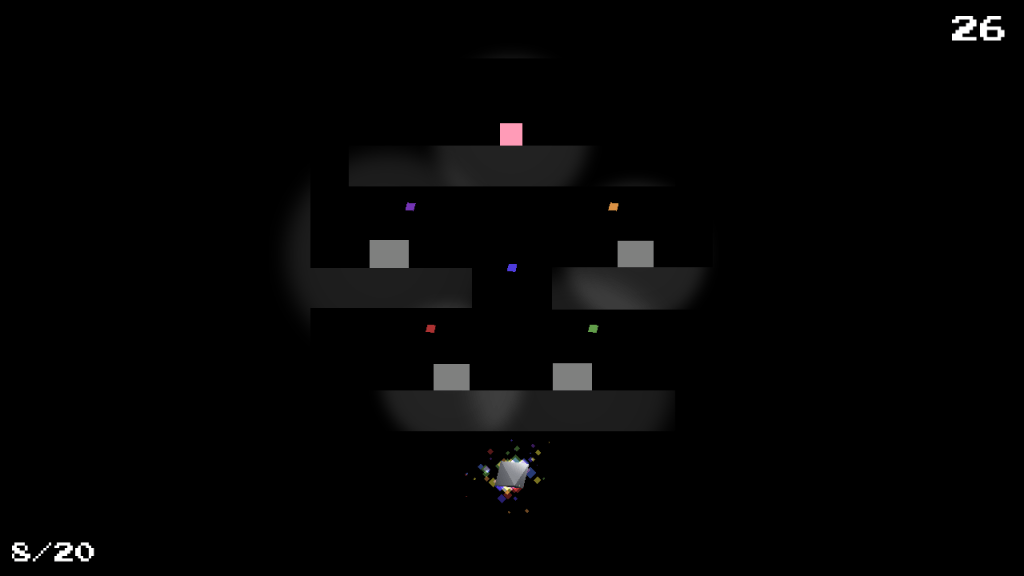
Finally we have Spectrum by Garrett Dickinson. This game is another platformer type game with an added twist. The entire level is invisble except for a ring of light around your character and a few objects in the level. Thus a lot of your first tries on a level will likely end with you falling down a hole. Overall though it is a very simple yet elegant game that was a lot of fun to play and watch. As my partner was the first to play I was able to analyze the game and give a few tips that I thought might be helpful. Yet I could still feel excitement while watching him play. When I got to play, it was just as fun and even better when I realized there was some pretty cool music to go with it.
The games that were fairly similar were This is the Only Level and Spectrum. In terms of mechanics both are platformer games with an added mechanic to make it more interesting. In terms of aesthetics, I feel that both can fall under the challenge and discovery categories. For Spectrum, the invisibility of the level creates a unique challenge for the player. This also adds a level of discovery as the player must do trial and error for pretty much every level to find the best path. For This is the Only Level, the changing rules also add a level of difficulty especially on the first run. However, it allows players to discover what their new rule is every stage and how they might use it to complete the level.
Overall I really enjoyed playing these games, and highly recommend you try them or any other games you might find when roaming the internet.
The first iteration of the game was focused on the area control mechanic. My partner, Dev, and I began brainstorming ideas. We eventually came up with a fairly simple game with a 12×12 board where players would try to take control of as much of the board as possible.
We decided to follow James’ lead and use poker hands to determine how many tokens each player would receive, with face cards earning extra tokens. However we added an additonal element to it in that players would each roll a dice and highest would receive an extra card for that time.
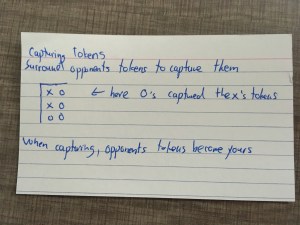
Now it was time to play. We decided that we would require units to be fully surrounded on all sides (including diagonals) in order for them to be captured. Captured tokens would be come yours.
Photo of our initial rule card for capturing
From this playtest we found that it would take a lot of tokens in order for a player to completely control the board. We realized it may be a good idea to shrink the board to reduce game time and the number of pieces required.
Overall, I didn’t feel very great with what we had made. I felt that the game itself mirrored the game Othello a bit too much and was not that fun.
Photo of Othello, from boardgamegeek.com
And so a few days came to pass…
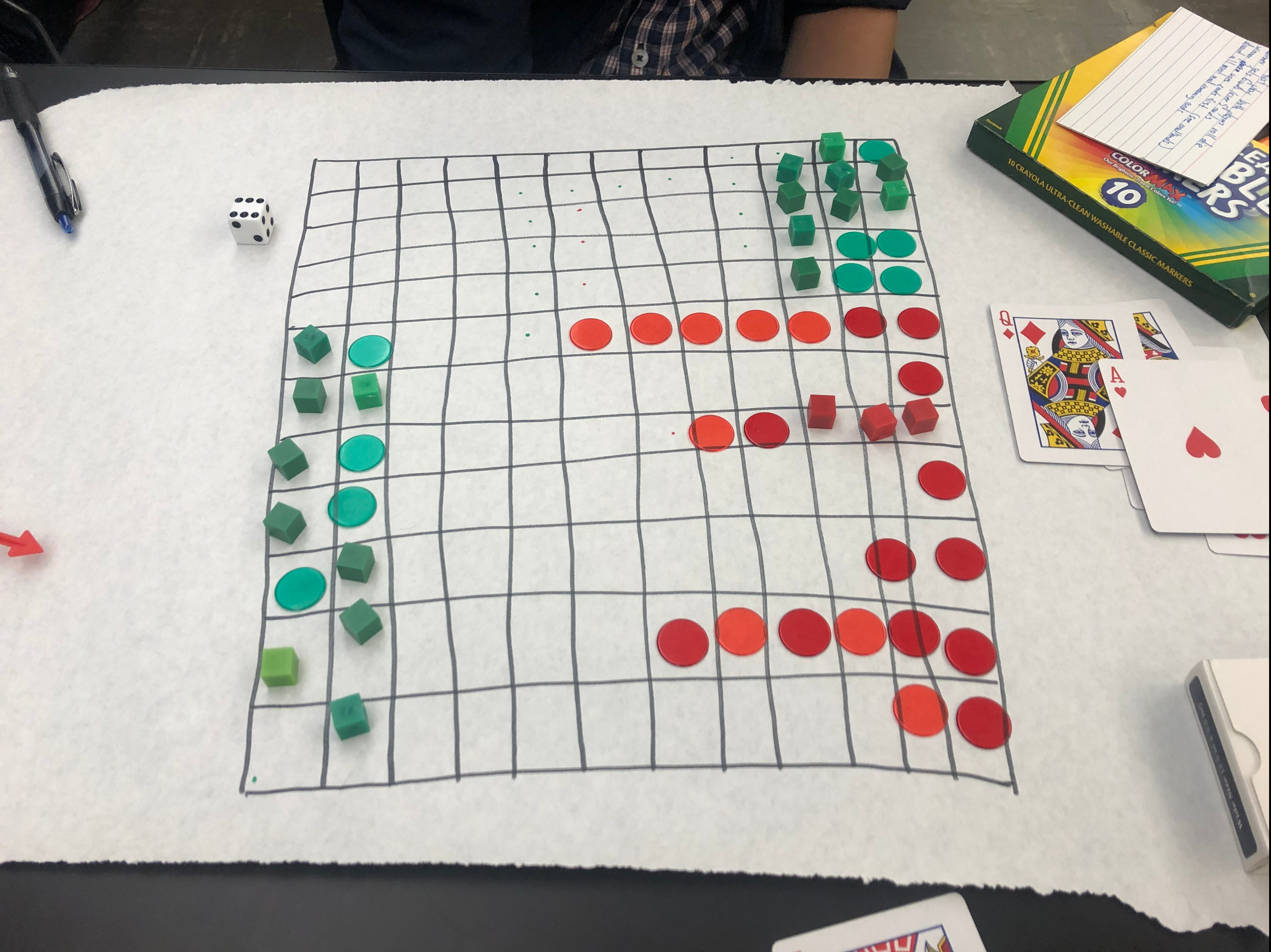
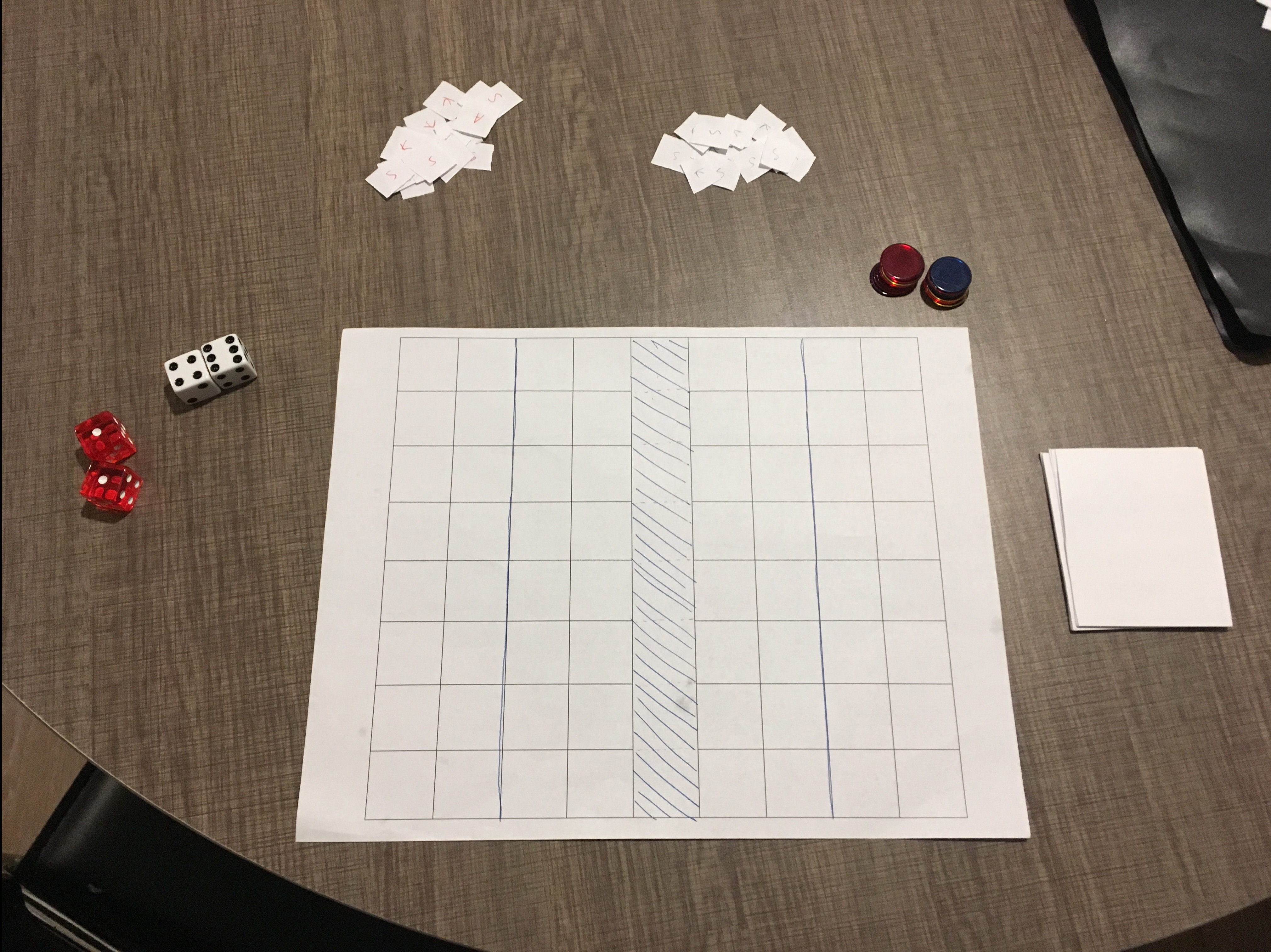
After a few days of thinking, I decided that I would give the game a complete overhaul. I would use similar methods for obtaining troops, but have multiple types and an obstacle, a river, on the board. The board would not be an 8×9 board with the river being in the middle. Players’ new objective would be to wipe out all of their opponents troops to win. The mechanics of the game became grid movement and dice rolling.
My first playtest went awry almost immediately. With no intial pieces on the board and no restrictions on where players could place troops, if one were to get lucky and get a knight on the board first, they could easily move their way across and win almost immediately which is what happened.
There were also problems in the fighting system. Initially if you attacked with one of your troops and lost your troop would be removed from the board. This led to a player losing everything if they were simply unlucky.
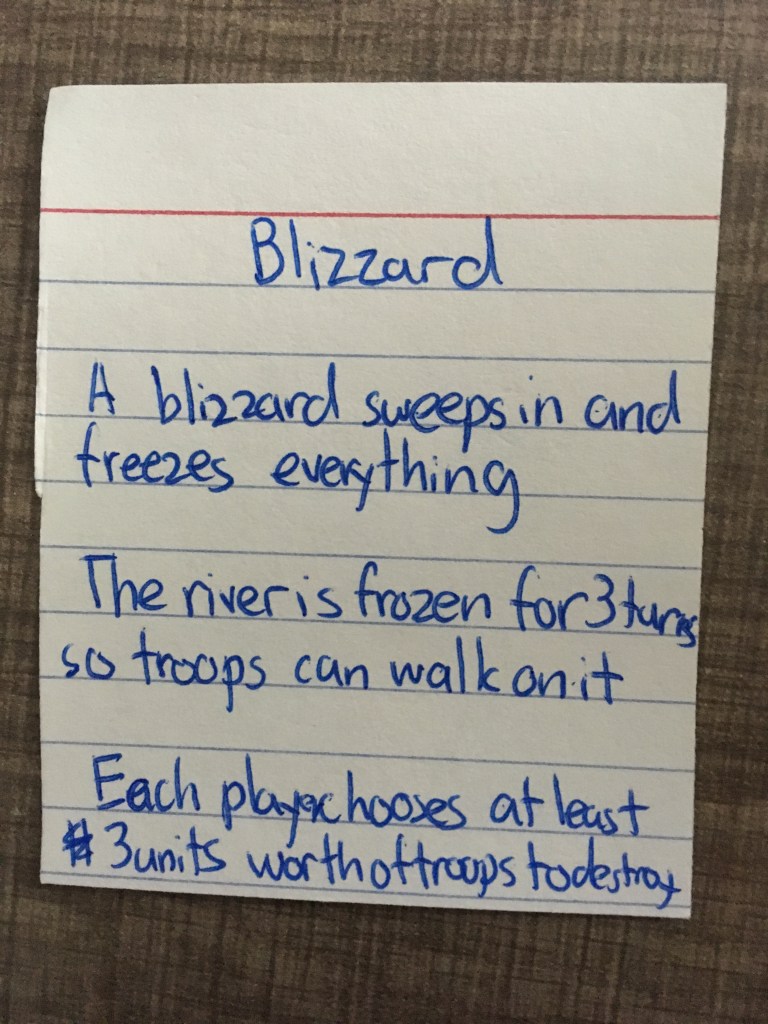
Finally, with players drawing War cards every turn there were substantial changes to the board state every turn and even during one playtest both me and my roommate were left with an empty board after a Blizzard card was drawn on the second turn.
Additionally with drawing War cards each turn the game would end pretty quickly even if the Ceasefire card was on the bottom.
The feedback I received from my roommate was more on the realism of the game in addition to some of the flaws in gameplay explained above.
Returning to the present…
Finally with a few playtests behind me I implemented some new and improved rules.
To solve the problems listed above I did the following
Players could now only place troops on the back two rows of their side.
Players started with 3 squire pieces and 1 knight piece which they could place during setup.
Attackers would no longer lose their troop if they lost a fight
Players would only draw a War card if they defeated a troop that turn.
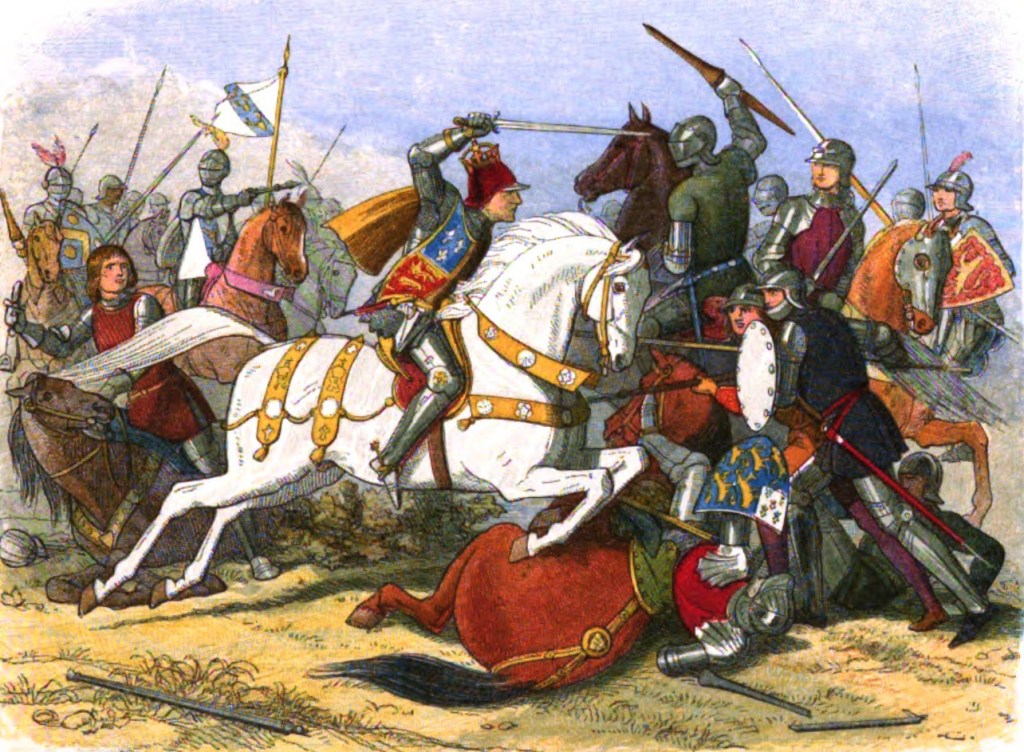
There were also a few minor changes that I will not go into but you can see in the updated rules. Here was also where I finalized the inspiration for this game, the “War of Roses.”
Photo of the War of Roses from brittanica.com
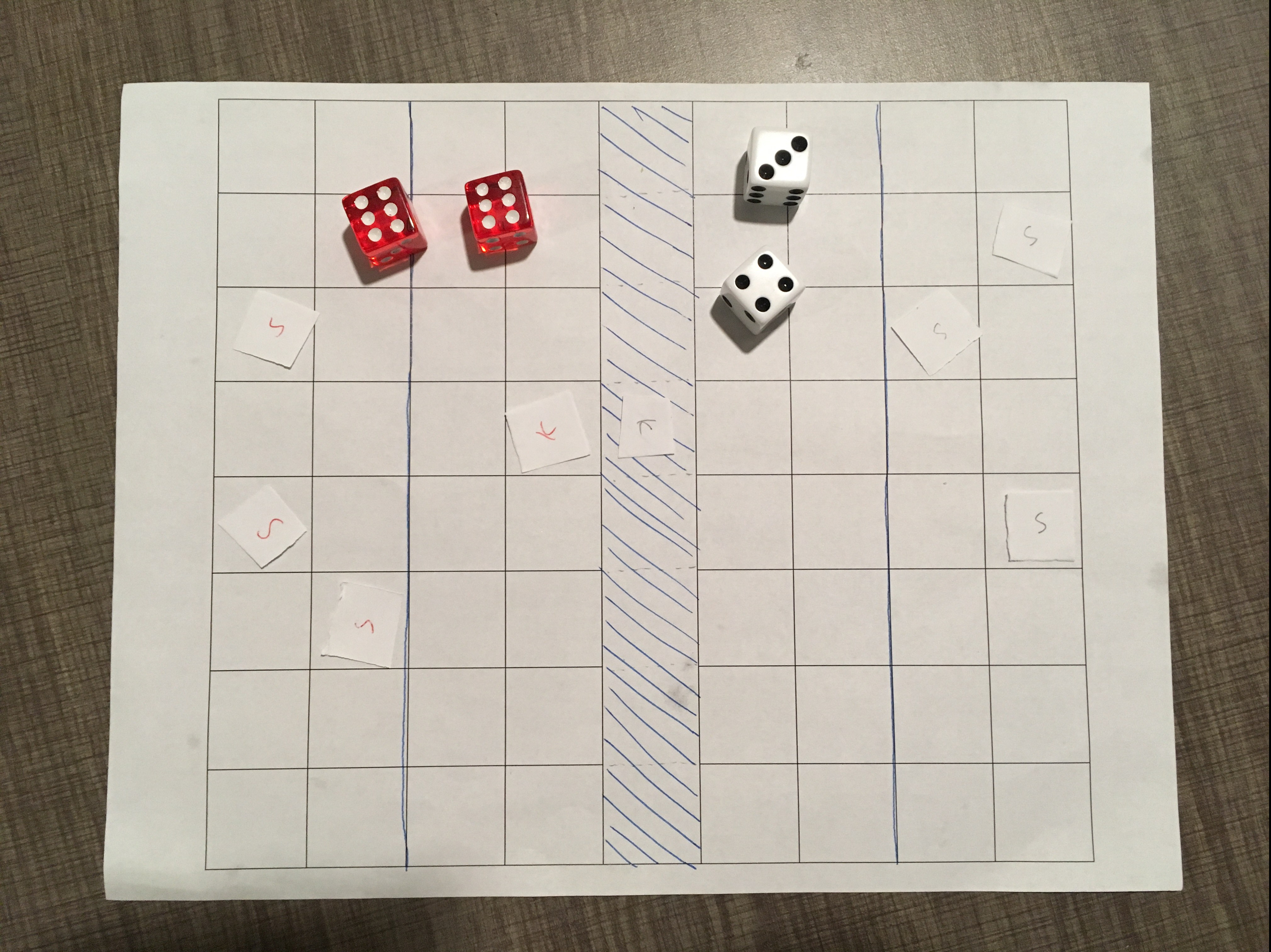
Now it was time to put the new rules to the test. With the third playtest in class, my partner and I engaged in battle, with me fighting as the White Rose of York and her the Red Rose of Lancaster.
My first turn was quite bad as I drew a useless hand and so only gained the one unit. My partner on the other hand started with a pair giving her a total of 3 units. This would be the trend for many turns to come.
Next, was the first fight, it was her knight attacking mine. Unfortunately for me she rolled double sixes thereby completely trouncing me and leaving me with only a few lowly squires.
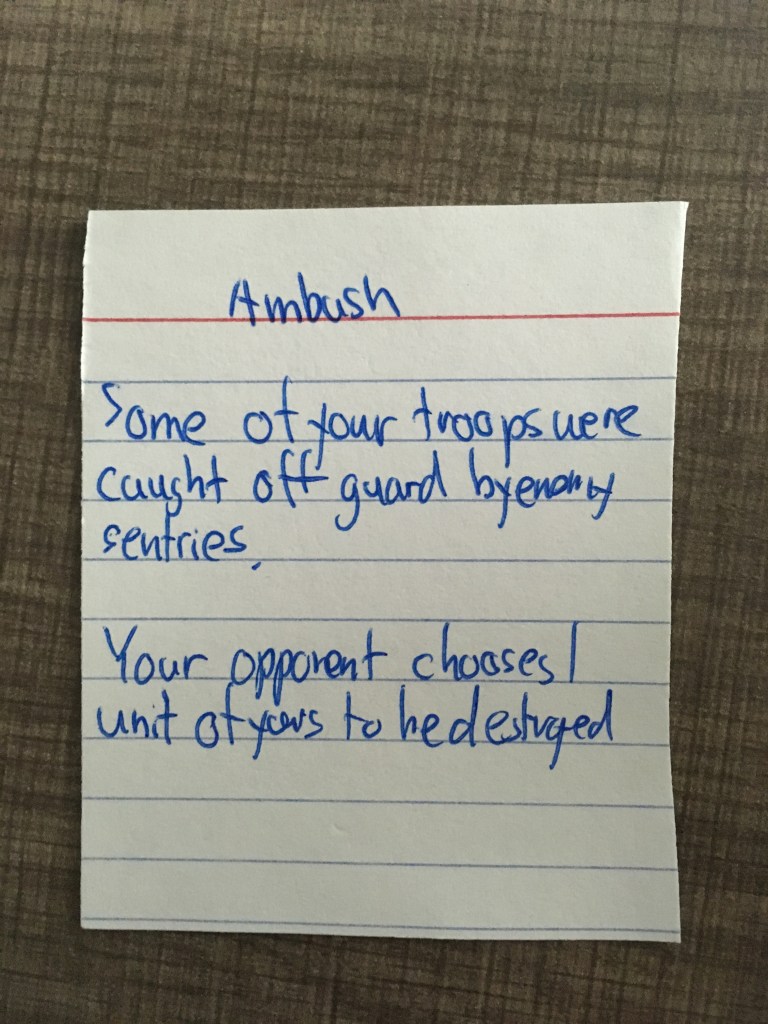
Luckily for me, because she had defeated a troop, she had to draw a War card at the end of her turn, which was an Ambush card allowing me to defeat one unit of hers.
Ultimately though, she continued to get good rolls and draws and defeated me after about 25 minutes of play.
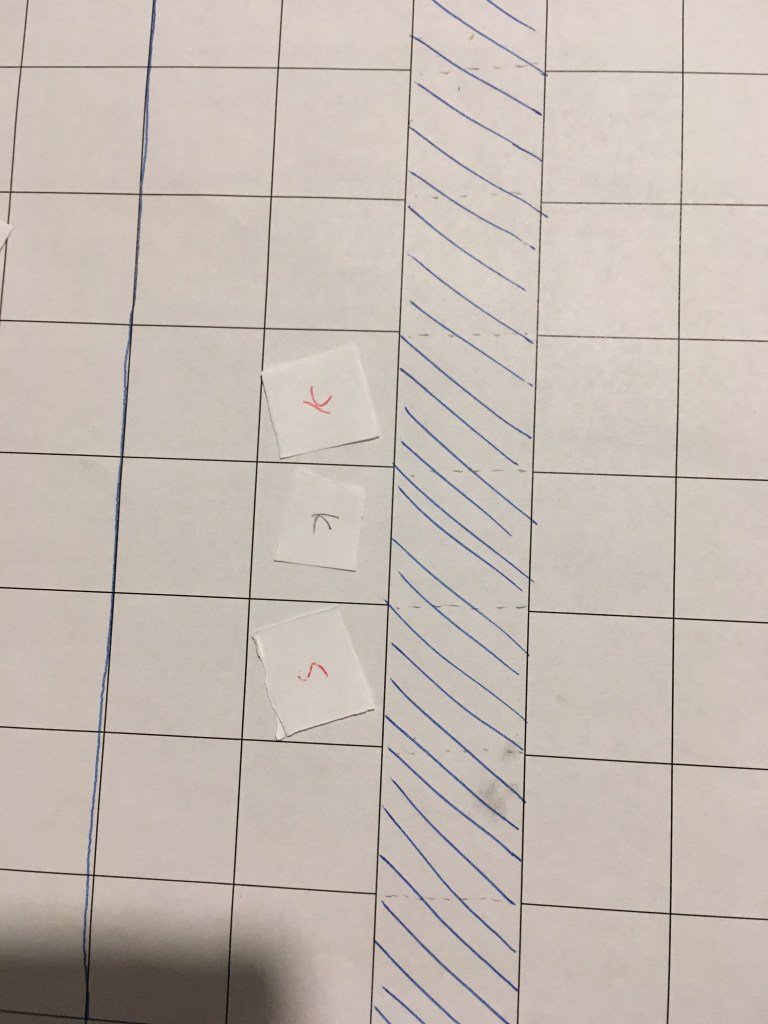
A bit of feedback I got from this playtest was to possibly expand the board as it was quite easy for one piece to cross the entirety of it with just a single roll. Another was to possibly allow flanking scenarios, where two troops would attack a single one at the same time as shown below.
Finally she pointed out a problem that I had forgotten to correct over my many iterations, that an artillery piece had never been played and so its cost should probably be reduced.
Overall, I really enjoyed this project and feel that it could really be a reality in the future. There are obviously some small kinks to still work out but the core of the game is solid. Now the next thing to do is get some better pieces not just a piece of paper with a letter on it!
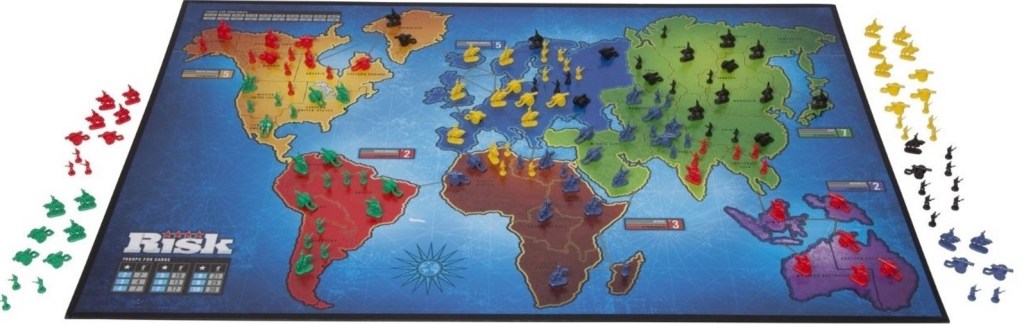
Today we will be taking a look at the game Risk, a game that I myself played with Thomas and Sonaal.
For those unfamiliar with the game, the goal is to have complete domination of the world (pretty easy right?). You do this by using your troops to go head to head with your opponents’ troops using dice to determine the outcome of battle. As you conquer territories you will be able to add more troops to your army each turn. Of course you will also need to defend your own territories so play smart!
Game Mechanics:
Area Control / Area Influence
Area Movement
Dice Rolling
Player Elimination
Set Collection
Our Game
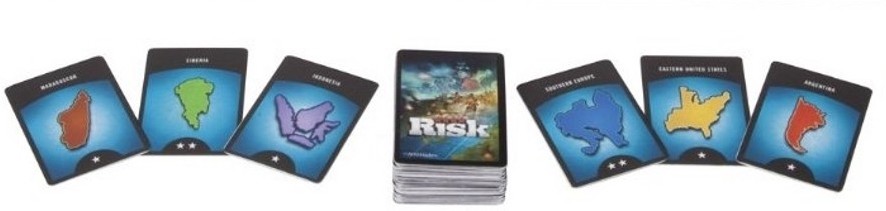
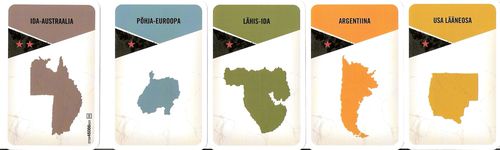
Setup Stage: To begin, we evenly divided up the territories on the board by dividing the deck of territory cards and place troops according to the stars on the cards.
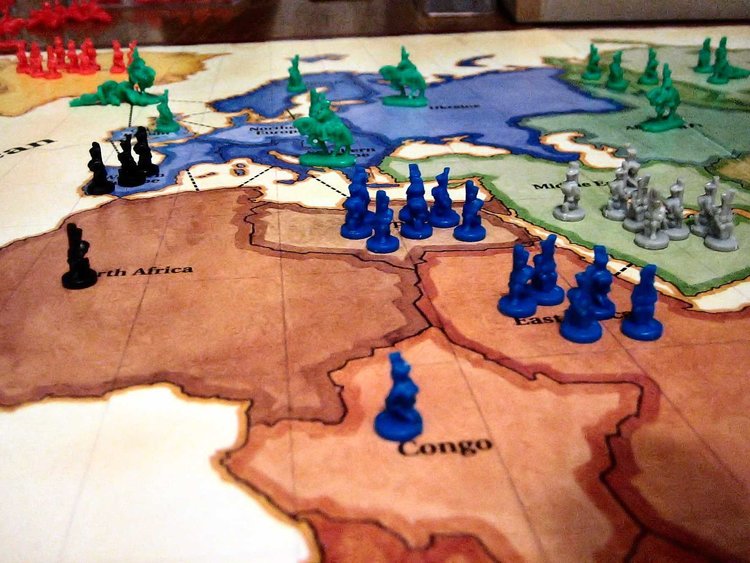
Thomas ended up with a strong presence in Australia, South America, and North America. Sonaal ended up with a strong presence in Africa but was fairly scattered in the rest of the world. I had a fairly strong presence in Europe, and one or two scattered in other continents.
We then rolled to see who would go first. The order went Sonaal, Thomas, then me.
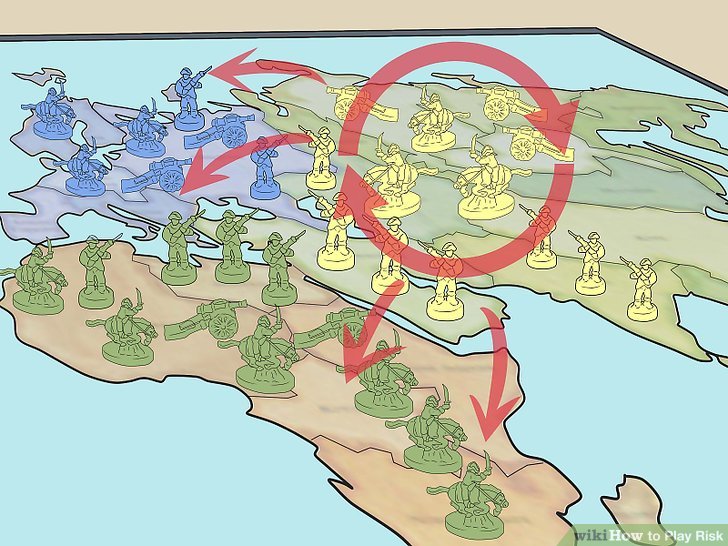
Turn 1: With our positions set, it was time to start the game. Each turn consists of three phases. 1. Deploy: Here players receive a number of troops to place in their territories, we decided on 4.
*not actual gameplay
In his first turn, Sonaal deployed additional troops to his territory in Africa. Thomas began preparing his troops in Australia for battle. I deployed all my units to a territory in Europe.
2. Attack: Here players can choose to attack as many territories adjacent to one they control. We roll dice equal to our attacking (up to 3) or defending (up to 2) units, with the highest rolls winning the battle.
In his first turn Sonaal, took over the remaining territories in Africa, thus conquering the entire continent.
Thomas was able to push me out of the final territory in Australia. He got very lucky with having most of Australia to begin as it is one of the better continents to hold.
I began fighting my way through Europe conquering a single territory. This was a double edged sword for me as while in the next turns when I finally conquered it all gave me many additional troops to deploy, it made me a target from the other two, who made a “if you don’t attack me I won’t attack you” pact (guess who was left to be attacked…).
3. Fortify: This final phase of the turn is when you can move troops from one of your territories to another. However the two territories must be connected by land or sea.
In the first turn, none of us moved any troops.
End of Turn Here if you had conquered a territory this turn draw a card. Since each of us had conquered one this turn we each got one.
Turn 2 onward: Although I do not have the play by play of what happened later, after the first three turns I had conquered all of Europe, Sonaal all of Africa, and Thomas all of Australia and South America. A highlight of our game was when Sonaal went after a territory and continually lost the dice roll until finally conquering at a high cost. Unfortunately we did not have enough time to finish the game. In the last minutes of play we all turned in our territory cards to gain a large number of troops and subsequently tried to destroy each other in World War III.
I hope that for those reading you have gotten a sense of how to play Risk, and will enjoy the playing this strategy game where sometimes horribly terrible luck can make you frustrated and taking over the world is definitely possible.
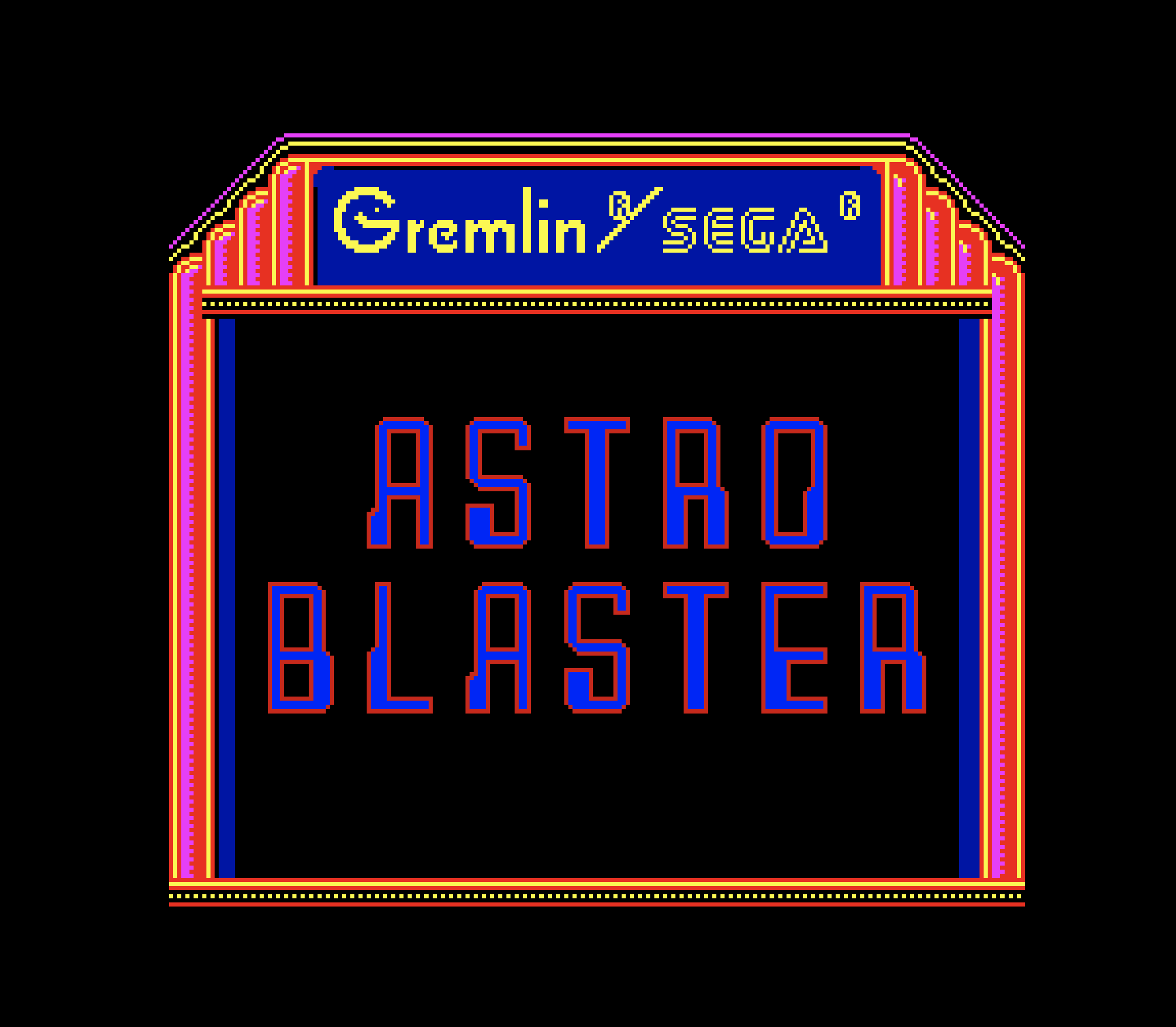
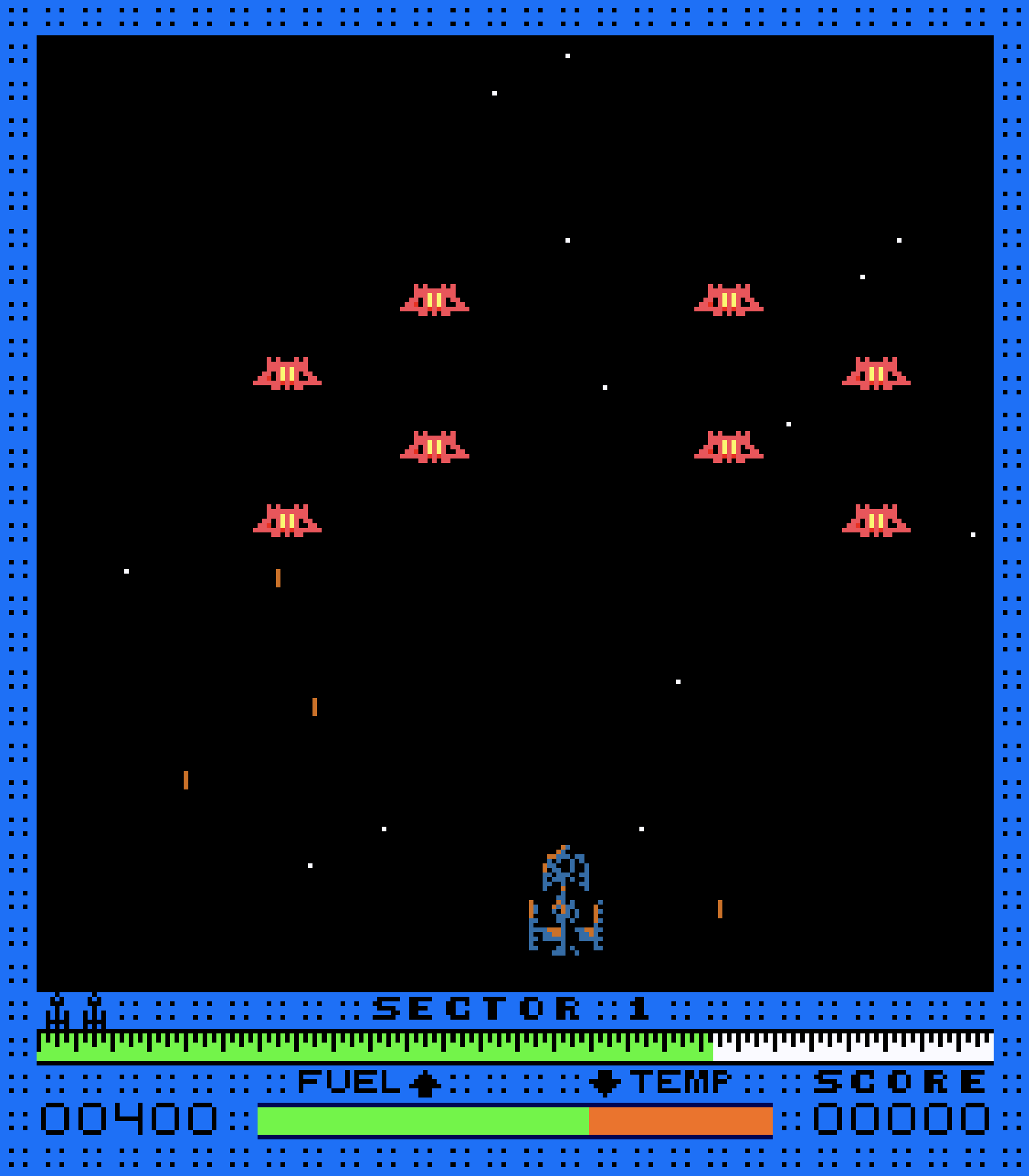
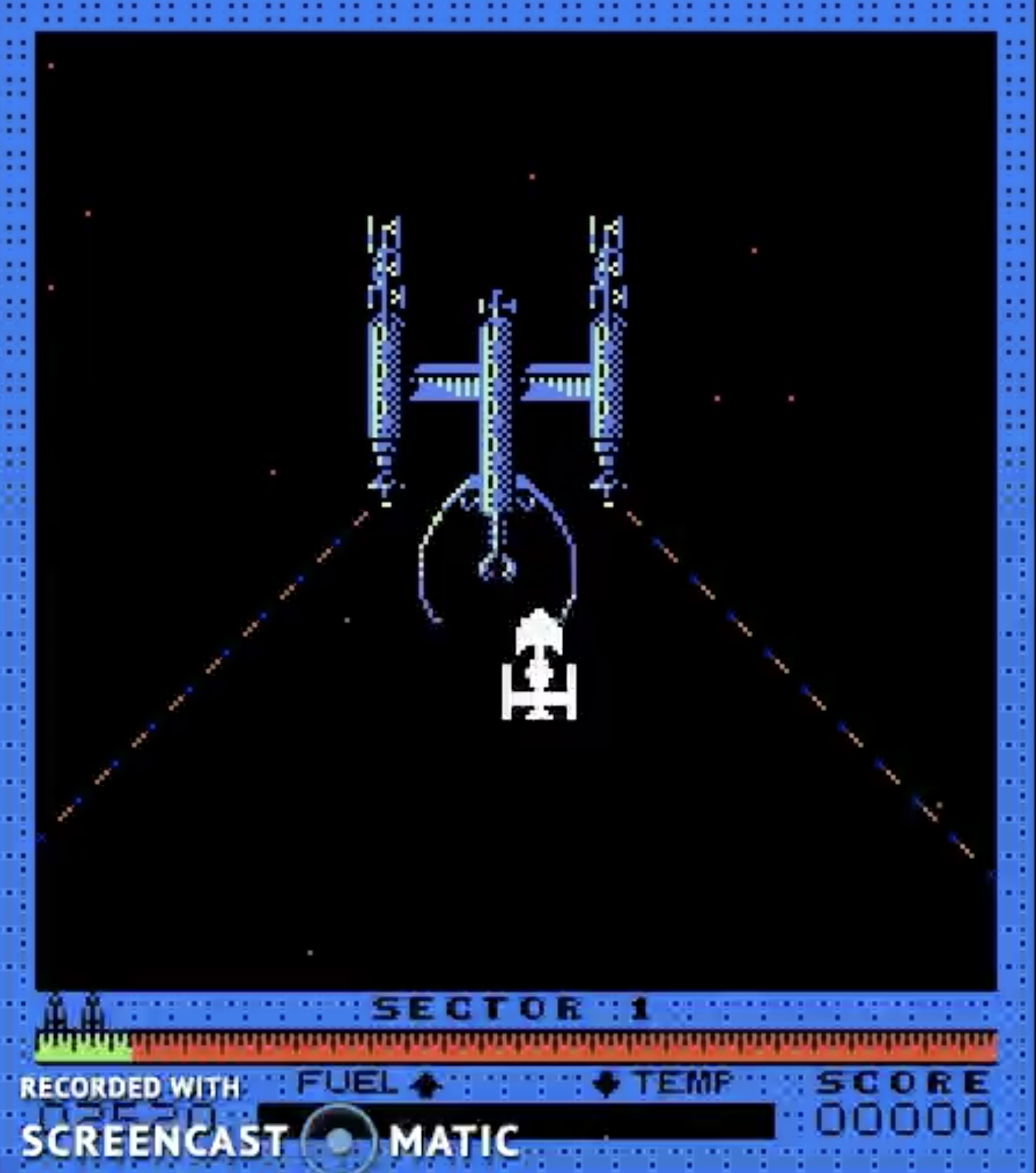
Today we will be taking a look at the classic arcade game, Astro Blaster. For those who are not familiar, Astro Blaster is a game similar to Space Invaders, where you pilot a space ship and try to shoot down various alien ships above you.
While the game is very simple, playing it was not so for me. I will admit that I felt some frustration that I was struggling to pass the third wave of ships. Though I did eventually did pass it (yay!), I immediately died when the next “easier” part came about. Despite all this I did very much enjoy playing this game as it reminded me of some of the retro games I have played in my lifetime.
In terms of the controls, there are only three, move right, move left, and shoot which makes playing on the computer fairly easy. The controls are actually fairly similar to their real world counterparts because of this simplicity. The left and right buttons correspond to the left and right arrow keys and the shooting button corresponds to the ctrl key.
Overall I would recommend people to play this game as it is pretty easy to play on the computer and is just fun if you’re someone who enjoys spaceships and shooting things
This is an example post, originally published as part of Blogging University. Enroll in one of our ten programs, and start your blog right.
You’re going to publish a post today. Don’t worry about how your blog looks. Don’t worry if you haven’t given it a name yet, or you’re feeling overwhelmed. Just click the “New Post” button, and tell us why you’re here.
Why do this?
Because it gives new readers context. What are you about? Why should they read your blog?
Because it will help you focus you own ideas about your blog and what you’d like to do with it.
The post can be short or long, a personal intro to your life or a bloggy mission statement, a manifesto for the future or a simple outline of your the types of things you hope to publish.
To help you get started, here are a few questions:
Why are you blogging publicly, rather than keeping a personal journal?
What topics do you think you’ll write about?
Who would you love to connect with via your blog?
If you blog successfully throughout the next year, what would you hope to have accomplished?
You’re not locked into any of this; one of the wonderful things about blogs is how they constantly evolve as we learn, grow, and interact with one another — but it’s good to know where and why you started, and articulating your goals may just give you a few other post ideas.
Can’t think how to get started? Just write the first thing that pops into your head. Anne Lamott, author of a book on writing we love, says that you need to give yourself permission to write a “crappy first draft”. Anne makes a great point — just start writing, and worry about editing it later.
When you’re ready to publish, give your post three to five tags that describe your blog’s focus — writing, photography, fiction, parenting, food, cars, movies, sports, whatever. These tags will help others who care about your topics find you in the Reader. Make sure one of the tags is “zerotohero,” so other new bloggers can find you, too.
 One Game At A Time